Member Profile – Carol Ward
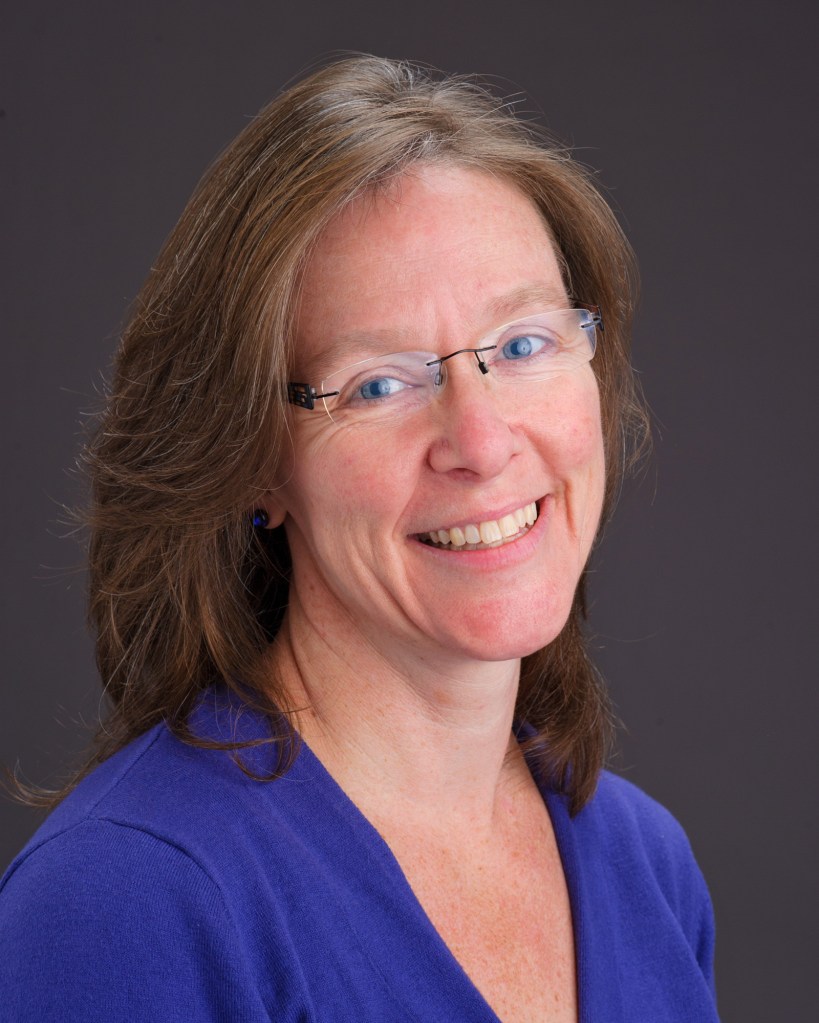
What positions do you currently hold?
I am a Curators’ Distinguished Professor in the Department of Pathology and
Anatomical Sciences in the School of Medicine and Adjunct Professor in the
Department of Anthropology at the University of Missouri.
What is your educational background?
I received my BS in Anthropology-Zoology at the University of Michigan in 1986, and my
PhD in 1991 working with Dr. Alan Walker at the Center for Functional Anatomy and
Evolution at the Johns Hopkins University School of Medicine.
What motivated you to pursue a career in biological anthropology?
I always loved animals and biology but did not have any clear career goals when I
started college. During the summer after my first year, I left a job at an amusement park
(I became tired of cleaning up vomit from roller coaster riders!) and decided instead to
take a summer class. I asked my friends what the weirdest course in the course catalog
was and someone told me “biological anthropology.” I had never heard of biological
anthropology before, and my friend told me it was about “cavemen and stuff.” Who
knew they had courses in cavemen? I had to try it. The professor was Dr. Milford
Wolpoff, who walked into the classroom on the first day and opened with “the earth is a
disk being carried on the back of a giant turtle and the stars are painted on a canvas
above us.” We students argued for two full class periods about this, and only much later
did I realize he was teaching us about models and testability and science. This
approach, and learning about the fossil record, hooked me. Under Dr. Wolpoff’s
guidance, I dove right into graduate courses and took lots of biology and animal
behavior as well. At that time there was a tremendous amount of cutting-edge research
on primate and animal behavior at Michigan, so I was immersed in that as well. When it
came time to graduate, I wavered between primate behavior and paleoanthropology, but
ultimately my passion for the fossil record of human evolution won out, and I was off to
Hopkins. I earned my PhD in Anatomy, and my research project involved the fossil
record of ape and human evolution.
Please describe your early career path.
I defended my dissertation in the fall of 1990, and in January 1991, I began a tenure-
track faculty position at the University of Missouri with a joint appointment between the
departments of Anthropology and what was then Anatomy (now Pathology and
Anatomical Sciences). The Anthropology Department needed someone to teach human
evolution but did not have a full-time position to offer. The Anatomy Department needed
someone to teach human anatomy to physical therapy students but also did not have a
full-time position to offer. My husband at the time was a faculty member in Anthropology
here at Mizzou, and the provost was interested in increasing the number of female
scientists on the faculty. So, I was incredibly lucky that they created a tenure-track
position for me! In 2006, I moved to a full-time position in the School of Medicine and
founded the Integrative Anatomy research, education and training program, which I
directed until 2021. This group was amazing because my colleagues spanned of the
field of vertebrate functional morphology, which significantly broadened my
understanding of how morphology works and evolves, how it can be studied in ways I
had not been aware of before. After all, primates are vertebrates, too! It is important to
step out into a broader world to look at one’s own research topics to gain new
perspectives, ideas and opportunities.
How did you choose your research focus?
I knew I loved fossils, but I wasn’t quite sure which ones. I initially thought the Miocene
was an uninteresting period in primate evolution and locomotion was an uninteresting
topic. My graduate advisor, Dr. Alan Walker, offered me the opportunity to describe a
newly discovered pelvis, vertebral column and lower limb of the Miocene ape Proconsul
(now called Ekembo) nyanzae from Mfangano Island, Kenya. What an opportunity! In
doing this research, I came to realize that the Miocene was an incredibly diverse time in
ape evolution. Primates have among the most diverse array of locomotor
specializations, and major functional transitions, e.g., to forelimb dominated below
branch arboreality and/or habitual terrestrial bipedality, underlie major evolutionary
transitions in ape and human evolution. Understanding these transitions turned out to
be one of the most important issues in reconstructing how apes and humans evolved.
I was doubly lucky, because the summer after my first year in graduate school, Alan and
his colleague Dr. Mark Teaford had the opportunity to invite one student to help them
describe new Proconsul fossils they had found at Rusinga. There were two of us in the
program that year, and they chose the other student. I was disappointed, but then Alan
invited me to describe the pelvis, etc., and when it was my turn to go to Kenya the next
year, I got a jump start on my research. Turns out that sometimes not being picked first
works out for the best! Based on my early work, I was eventually invited to describe
fossils of Australopithecus afarensis from Hadar, A. anamensis from Kanapoi, Kenya,
and more. Also, my early work on the lower back and pelvis spawned another lab-based
research program focused on understanding variation and morphology of the whole
torso and its relation to posture and locomotion in extant anthropoid primates.
Who have been your most influential mentors?
- Milford Wolpoff introduced me to the fossil record of human evolution, taught me how to think critically, pushed me to become involved in graduate classes early on,and has mentored me ever since.
- Alan Walker was my PhD advisor and one of the finest morphologists and paleontologists I have ever known. He provided me with innumerable opportunities to study original fossils, go to the field, and more.
- Bruce Latimer helped me learn to think about form and function and to ask and demonstrate “why” rather than falling prey to using correlations as explanations.
- Meave Leakey has always been a role model for me as an outstanding thinker, fieldworker and scientist.
- Bill Kimbel not only helped me study fossils, he helped me learn to work carefully and critically and was always supportive. He was my favorite person to talk fossils with.
- There are many, many others who have helped me along the way and shaped my career.
What were your most formative training experiences?
I would have to say talking with my mentors, but perhaps most of all spending days,
weeks, months, and years of time looking at original fossils in museums. There is no
substitute for sitting down with the original specimens, drawing them, feeling them, and
comparing them. No amount of taking measurements, imaging, or analysis will
substitute. Also, being in the museum, especially in Nairobi where I have spent many
years, was an opportunity to meet and interact with so many other colleagues as they
passed through doing their own research. One year during graduate school, I
overlapped there with one of my academic heroes, John Fleagle. He asked me what I
was working on, and I told him I was going to be describing a Proconsul (now Ekembo)
pelvis. He asked me how I was going to do it. I told him I would measure a bunch of
extant apes and monkeys and then the fossil and see what it looked like. He stopped
me right there and said “No! Don’t measure anything!” and followed with “Sit down with
your fossil, along with extant ape and monkey specimens. Look at them. Notice how
they are similar and different and then figure out why. Once you have done that, find
measurements that will show others what you see and allow you to test your ideas.”
This was perhaps the most influential piece of advice I ever received and, probably
much to their annoyance, I still relate John’s wisdom to each and every one of my
students.
How do you balance the competing priorities of teaching, research, outreach, and personal life?
I am not sure I do! This is one of the most difficult things of all. Starting before I had
tenure and continuing after, I had three beautiful children. Although I chose my career
because I wanted to find hominin fossils and describe them, I decided that I did not want
to spend that much time away from my kids. I chose not to become involved in fieldwork
myself while they were young, but when they were older, I began the jointly run West
Turkana Paleo Project, which continues to this day, with my colleagues Drs. Fredrick
Kyalo Manthi and J. Michael Plavcan. I was also lucky to have a supportive spouse who
was also an academic and so understood the demands and actively encouraged me to
travel for research and meetings, work late in advance of grant deadlines, pursue other
career opportunities, and take care of myself. I worried that my kids would resent my
frequent travel, but they now say that although they missed me, they are so proud of what I have been able to accomplish. It makes me feel a little better. I have always
made time for doing what I like, such as exercise, gardening, spending time outdoors,
and more. I am a pretty high energy person and thrive on challenge, and perhaps that
has helped.
Which professional achievements are you most proud of?
My first published paper established that early apes lacked tails, which I still think is
really important. I have been lucky enough to work on the earliest evidence for a mostly
human-like midfoot in A. afarensis (and other postcranial fossils from Hadar) and the
earliest evidence of the modern human hand and to describe the fossils of A.
anamensis from Kenya. I am also proud of the projects I have worked on investigating
how several aspects of torso morphology, fossil and extant, relate to locomotion
throughout hominoid evolutionary history.
In your opinion, what are the biggest challenges facing women in the biological anthropology community today?
I think the biggest challenges women face today are, in part, those that everyone faces,
which is the changing world of higher education, especially in the United States. Being a
parent is always a challenge, and the expectations of mothers, who are primarily
responsible for childcare, especially when kids are little, will still be there. There are no
easy solutions, and we must continue to push for the flexibility to enable women to find
their paths. I am encouraged by the awareness of inappropriate behavior toward women
in our field and feel like that is getting much better. I think even bigger challenges,
though, are faced by our nonbinary and transgendered colleagues, and I hope that the
progress women have made can in some way be channeled to help them as well.
What advice would you offer women in biological anthropology beginning their scientific careers?
I would definitely counsel them to be protective of their time and priorities. It is tempting
to agree to participate in everything, especially service and work-related social events or
advising too many students, but the first few years is not the time for that. I would work
with your chair and mentors to clearly define your priorities and keep your eyes on that
prize. Once you establish yourself, you will have time to give back to others. Importantly,
though, seek out mentors. You will likely benefit from more than just one. Find someone
at your university who can mentor you through the ins and outs of your specific job;
someone in your field who can mentor you through growing your research career; and
others who you know are great teachers to get ideas about how to improve your
teaching and/or make it more manageable. If there are awards or opportunities in which
you are interested, seek mentors who have been previous recipients to help you get to
where you want. A network of mentors is your most important resource as you navigate
your career.
What attracted you to BAWMN and what does participating in BAWMN mean to you?
I love BAWMN. My favorite part of it is the networking and mentorship. I have met so
many wonderful colleagues and gotten to know so many up-and-coming scholars. I like
to think I have been able to offer some of them useful advice, and I have also been able
to turn to people in our community to seek advice for myself. Sometimes, just having
others to talk to who are going through or have gone through something similar is an
important outlet for sharing feelings and getting your thoughts/feelings/ideas together for
yourself. As I mentioned above, I think a network of mentors is super important, and
BAWMN can be a key part of that.
 Biological Anthropology Women's Mentoring Network