Member Profile – Shara Bailey
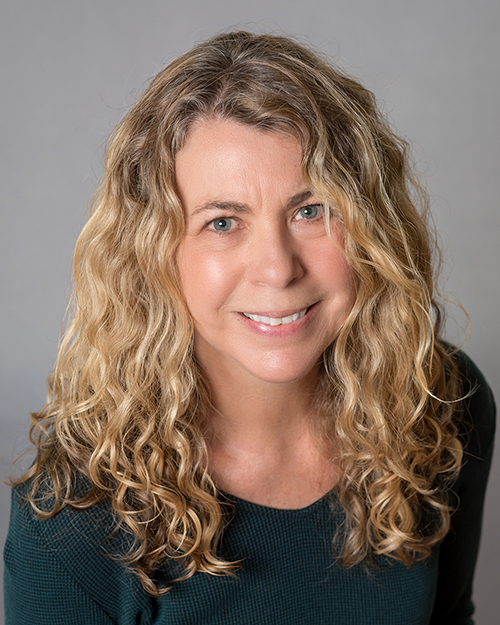
What positions do you currently hold?
I’m a professor in the Department of Anthropology in the College of Arts and Sciences at New York University (NYU) and one of the core faculty members of the New York Consortium for Evolutionary Primatology (NYCEP).
What is your educational background?
I have a double major bachelor’s degree in psychology and anthropology from Temple University, and I have a master’s degree and PhD in biological anthropology from Arizona State University (ASU).
What motivated you to pursue a career in biological anthropology?
I was a psychology major at Temple University, which has one of those core programs in which you are required to take two lab sciences. I had already taken biology, I preferred not to take physics, and chemistry didn’t work with my schedule. I saw that a course called “Biological Anthropology” counted as a lab science, and I thought, “Well, that sounds interesting. I wonder what that is”. So, I took it, and, to my surprise, I really enjoyed it. Since I was a junior and already nearly finished with my psychology requirements, I decided to take all my remaining credits in anthropology to get the second major. An archaeology course exposed me to the Clovis/Pre-Clovis debate regarding Native American origins and to the work of Christy Turner at ASU. I was already very interested in learning about Native Americans because after my grandfather died, my grandmother jumped into her Volkswagen bug and spent months driving around the American Southwest. She brought home stories, as well as pottery, rugs, and jewelry she had purchased from roadside stalls. Like my grandmother, I also fell in love with the American Southwest after a visit to New Mexico in 1989. It was the dramatic landscapes but also the sense of antiquity I felt there. Back at Temple, I knew I wanted to go on to graduate school but was undecided about whether to pursue psychology or anthropology. So, I took a career test at the career counseling center and the results were clear: I would be happier digging in the dirt than chopping off the heads of rats and studying them in a neuropsychology lab. I knew I wanted to be in the Southwest, and I knew I was interested in Native American origins, so I only applied to Arizona State University. Thank goodness they let me in!
Please describe your early career path.
Once I got to ASU, I took a dental anthropology class with Christy Turner, and that was kind of it. I decided that teeth are cool. As an artist, I think there is something about teeth — their smoothness, their shininess — that makes them very attractive. I think ancient people appreciated that as well, since they often made personal ornaments out of teeth. I was planning to do my research on South American origins since I knew Spanish and Christy’s work focused on North America, but Christy redirected me, saying he thought South America was too dangerous a place to work. Instead, he suggested I use teeth to test the hypothesis of evolutionary continuity versus discontinuity in Europe, as he was also interested in modern human origins. I attended a workshop on modern human origins and great minds like Chris Stringer, Milford Wolpoff, Ian Tattersall, and Geoff Clark were all presenting. I realized that no one was studying the teeth of Neanderthals, and that’s when I got interested in the dental morphology of ancient humans. After my PhD, I did a postdoc at George Washington University (GWU), where I focused on Australopithecus and Paranthropus teeth. After completing my 2-year postdoc at GWU, I accepted a 5-year research position at the Max Planck Institute for Evolutionary Anthropology (MPI). Once at the MPI, I focused on the late Pleistocene because our director, Jean-Jacques Hublin, was very interested in this ”transitional” period between late Neanderthals and early Upper Paleolithic modern humans. After only a year at the MPI I received a letter from NYU encouraging me to apply for a tenure-track position that had opened up. NYU was my dream job, so I felt I had to explore the opportunity. I got the job offer, decided it was a good fit professionally and personally (my family are in the tri-state area) and so I left the MPI to come to NYU. This fall will be the beginning of my 20th year.
Who have been your most influential mentors?
Christy Turner planted the seed of my initial research idea and interest in teeth. I learned to see meaning in bumps and grooves and patterns in teeth, but Christy was focused on the Arizona State University Dental Anthropology System (ASUDAS) scoring system. Then the Institute of Human Origins came to ASU in the mid-1990s. It was an exciting time for us all. I decided to work with Bill Kimbel, who gave me this important advice: look with new eyes. What do you see? And that’s when I noticed not just the morphological differences between Neanderthals and modern humans (based on the ASU scoring system) but also the shape differences, which got me thinking about how one measures shape. This ultimately led me to incorporating morphometrics approaches in my research.
What were your most formative training experiences?
My postdoc at GWU with Bernard Wood introduced me to early hominins, and in the end the information I collected for those projects provided me with a huge data set. I think I have dental data from about 75 to 80% of the pre-Neolithic hominin fossil record. At the MPI, I got a chance to collect data on early modern humans from Israel and Africa. My time there was really incredible, because I got to interact with international colleagues and attend international meetings. I learned to invest time in building professional relationships with colleagues rather than focusing all my energy just on collecting data.
What is your subspecialty and how did you choose it?
I started as a dental anthropologist and then got interested in paleoanthropology, but now people see me as a paleoanthropologist who studies teeth.
How do you balance the competing priorities of teaching, research, outreach, and personal life?
This is such a good question. I’m very lucky that I am good at multitasking. But I recognize that every time you say yes to one thing, you have to say no to something else. So, I have to think about my priorities. And my priorities have shifted during different parts of my life. For example, early in my career I worked all the time, probably more than 60 hours a week. Now, my daughter is my number one priority. I maintain normal work hours, but I may skip NYU or NYCEP events if my daughter needs me. At some point I realized that if my priority was getting tenure, I’d have to put other things on hold for a while (my art for example). But once I became a full professor, I put aside time (two-to-four hours a week) to paint regularly. Art moved up in my priorities because it is good for my mental health.
Which professional achievements are you most proud of?
There are two papers that I like most. The first is one I published with Tim Weaver on whether you could calculate the probability that isolated teeth or incomplete dentitions belong to Neanderthals. When I got the idea, I walked down the hallway at MPI to Tim’s office. I asked, “Is this even possible?” and he said, “Absolutely!” So, we worked together on it. My second favorite is the paper I led on the Denisovan lower M2 with 3 roots. I believe it provided the first clear dental evidence for admixture between archaic (Denisovan) and modern humans, which we already knew existed from the DNA. But more generally, though, I’m proud of myself because every goal that I set I have met. Can I get a PhD? An academic job? Full professor? Yes, to all of them.
In your opinion, what are the biggest challenges facing women in the biological anthropology community today?
I think things are changing and getting better, but I still think that there is bias against women, especially in certain sub-disciplines. I think women have to work harder to show that they’re intelligent, that they know what they’re talking about, and that they didn’t get ahead because of their looks–or something worse. I don’t do fieldwork, but I hear there is still ”bad behavior” that can lead to toxic environments, especially for women. Another big challenge is balancing good parenting and meeting the expectations of an academic, especially at an R1 institution. While things are changing, I believe it remains more challenging for women, who are still expected to shoulder the bulk of domestic and childcare needs. This balance is especially challenging for single mothers, like me.
What advice would you offer women in biological anthropology beginning their scientific careers?
The first thing that comes to my mind is: don’t say yes to everything. As I mentioned, if you say yes to a new thing, you have to say no to something else. Studies show that women have more difficulty saying no than men. So, I urge women to really consider whether what you’re saying yes to is going to help you reach your goals. If it’s not, focus your energy on something that will. I know a lot of women struggle with the urge to be people-pleasers and I’ve struggled with that myself.Then go for it.
What attracted you to BAWMN and what does participating in BAWMN mean to you?
Although I was one of the first BAWMN chairs, I’ve been less active lately (see above on balancing work and life!). When Tanya Smith started BAWMN, it was sort of like an “old girls” club, but I think things have been changing in the biological anthropology world. I think probably women now outnumber men, but I still think BAWMN is important. I like the idea of a mentoring space for women and to me mentoring means being available for people who want to work with me. If you ask me for advice or ask me to help you, I will help you, and I will go out of my way to do it. Having said that, I think well-meaning people actually do a disservice when they hold people’s hands too much. We can do hard things, but if we insist that other people do them for us, we’ll never learn to fly on our own.
 Biological Anthropology Women's Mentoring Network