Member Profile: Dr. Tanya Smith
What is your current position?
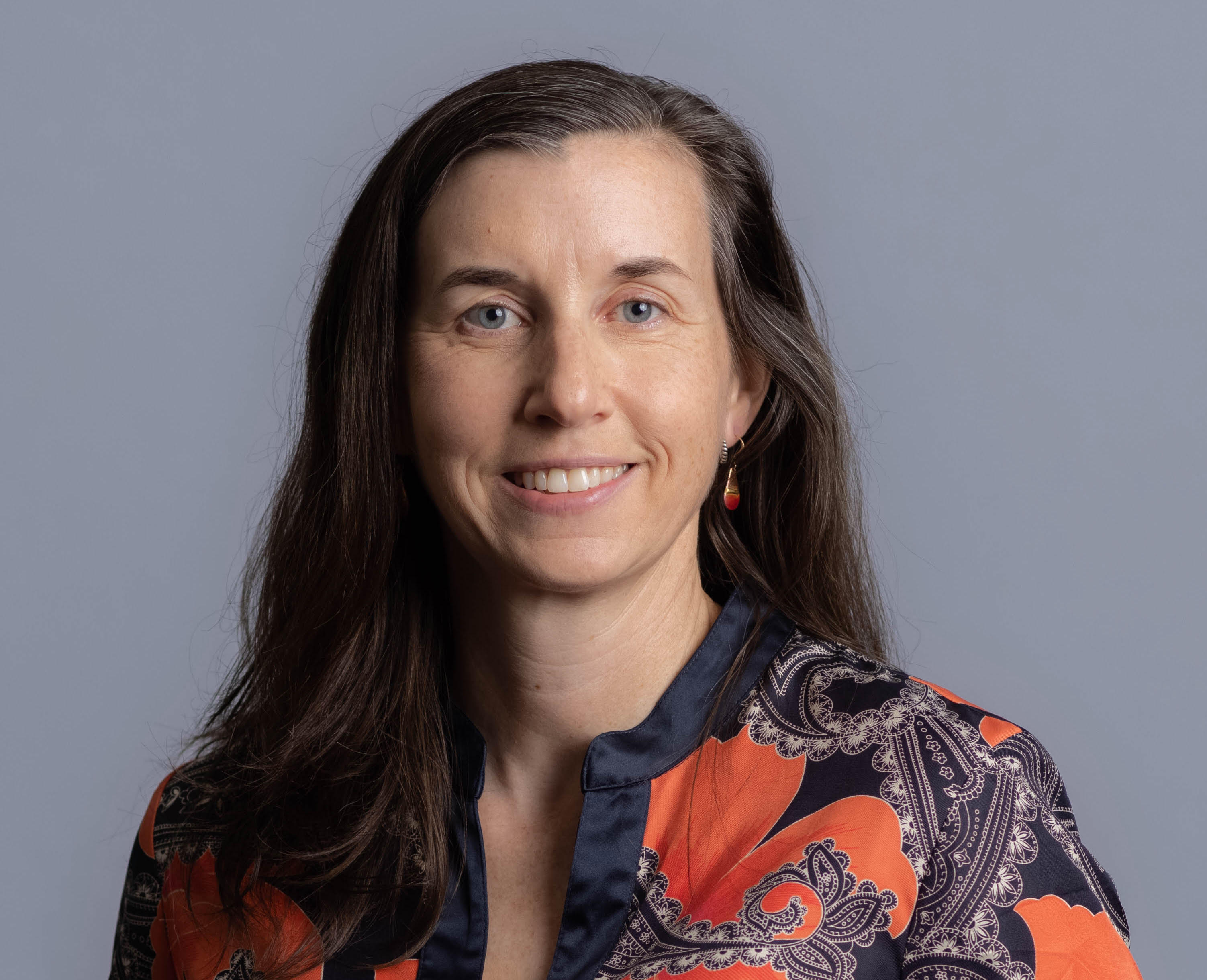
I hold the rank of Professor in two research centers at Griffith University (Queensland, Australia): the Griffith Centre for Social and Cultural Research and the Australian Research Centre for Human Evolution. I am also an Australian Research Council Future Fellow, which is a four-year fellowship for mid-career scholars to undertake research full time. Prior to moving to Australia, I held Assistant and Associate Professorships at Harvard University, and Fellowships at the Max Planck Institute for Evolutionary Anthropology and the Radcliffe Institute for Advanced Study.
What is your educational background?
I received my Master’s and Doctoral Degrees in Anthropological Sciences from Stony Brook University and my Bachelor of Science in Biology from the State University of New York at Geneseo.
What motivated you to pursue a career in biological anthropology?
As a very young child I was fascinated by the natural world, particularly the nature reserve near my home in upstate New York. I spent my free time mentally mapping the forest and observing seasonal changes in the stream-bank ecology as I caught small fish, frogs, and toads to bring home. But I didn’t know any scientists, and couldn’t have imagined what a research career might look like. During my first semester at college, I was lit up by an introductory biological anthropology course taught by Robert (Bob) Anemone. It encompassed so many of my interests in natural history, primatology, skeletal biology, and evolution. Over the next few years, I took every bio anthro course that Bob taught while also pursuing a degree in biology at his urging.
Please describe your early career path.
I was lucky to spend several weeks collecting primate fossils with Bob and the late Dana Cope in the Great Divide Basin of Wyoming. As an avid camper and someone who is highly sensitive to detail, field work suited me. We would wake early and spend hours each day poring over sandy exposures and active ant hills. In my dreams at night, I’d relive the rush of spotting the rare, tiny fossil teeth sparkling amidst sandy pebbles. During my senior year at Geneseo, I read about how scholars were exploring ancient human development using biological rhythms in teeth, and I started my own search for these microscopic lines in fossil teeth we found in Wyoming.
Once I finished my undergrad degree, I spent my gap year applying to grad schools, volunteering as a teaching assistant at Geneseo, and attending an unforgettable primatology field school on Ometepe Island (Nicaragua) with Paul Garber. I then joined Barbara Welker as her research assistant in Santa Rosa National Park (Coast Rica) for several months of studying mantled howler monkeys. By then I was hooked, and when Diane Doran called and offered a funded doctoral pathway at Stony Brook, I didn’t think twice about accepting it. I somewhat naively thought that becoming a professor and living in a small college town would be the very best life, although today I feel that “Professional Student” is a more apt title than “Professor.” Even 25 years later, I remember the elation and thrill of getting into graduate school.
Who have been your most influential mentors?
Bob Anemone (currently at UNC Greensboro), Lawrence Martin (Stony Brook University), and Donald Reid (who has retired from Newcastle University [UK]). It’s not lost on me that my undergraduate advisor, doctoral supervisor, entire thesis committee, postdoctoral advisor, departmental chair, and first research centre director were all men. It has been wonderful to finally have a female supervisor—Susan Forde, the Director of the Griffith Centre for Social and Cultural Research—more than two decades after starting graduate school.
What were your most formative training experiences?
This is difficult to answer—paleontological and primatological field work were true labors of love, and if someone paid me to do it year-round, I would still be at it! Early in grad school I travelled to Europe several times to borrow primate materials from museums and to work in Newcastle with Don Reid. Navigating access to skeletal collections while travelling alone on a budget through unfamiliar countries taught me what life in anthropological research entailed. It also ignited a deep respect for the value of natural history museums and a life-long love of travel. At the same time, I was attending American Association of Physical (now Biological) Anthropology meetings on my own, which forced me to make connections with established scholars and helped me build confidence that I could master the subtle, unwritten rules of collaboration and professional networking. As an introverted, first-generation student, it wasn’t easy but it has served me well.
What is your sub-specialty and how did you choose it?
Teeth! In The Tales Teeth Tell, I describe my first research breakthrough during my final year of college. It sparked profound excitement that I could discover something that no one had ever seen before or understood. Meeting Lawrence Martin a year later showed me that people could actually build careers based on studying how teeth may resolve important questions about the origin and evolution of apes and humans. I’ve since written more than a few papers and an entire popular science book on how much one can learn from these singular and precise records of childhood—including past diet, health, and environment variation. I still have not tired of learning more or coming up with unique solutions to serious challenges in my sub-field. These “ah-ha” moments that started in college are few and far between, but when they come, I celebrate how awesome it is to follow my curiosity as a “day job!”
How do you balance the competing priorities of teaching, research, outreach, and personal life?
Honestly, I’ve never managed to juggle these four priorities together. My career has been a shifting combination of two at a time—maybe three when juggling demands are only “average.” I’ve had the great privilege of significant research support since I started running Lawrence’s lab at Stony Brook, after which I moved into a research-intensive postdoc, built a prolific research unit, and made the best of life in Europe. Transitioning to a 50:50 teaching/research profile as an Assistant Professor at Harvard led to a few rough and lonely years. I ultimately conceded that I simply wasn’t going to have the life I wanted in such an intense environment (to say nothing of the endless winters in Boston). That decision freed me up to do more outreach, begin a new romantic relationship, and ultimately move my blended family to a phenomenal country for a new academic position. I suppose it was important to get clear on what I didn’t want or simply wouldn’t accept—even when conditioned to pursue a narrow ideal of success—to move in a more authentic direction.
Which professional achievements are you most proud of?
I have several but I couldn’t rank order them. I am definitely proud of co-founding BA WMN, and I especially loved co-hosting our 10-year anniversary party in April 2019. I am also delighted to have helped my honors and PhD students complete their degrees. Writing a well-reviewed popular science book after being denied tenure at Harvard was an important act of professional assertion—especially as there were no guarantees that I would “land well” once becoming unemployed. After moving to Australia, I led an exciting interdisciplinary study that showed how the teeth of Neanderthal children can be used to reconstruct weekly records of ancient climate, nursing behavior, season at birth, and illness. This project was a finalist for the 2019 Eureka Prize for Excellence in Interdisciplinary Scientific Research, which is like the “Science Oscars” in Australia—complete with a 600-person gala dinner in the Sydney Town Hall.
In your opinion, what are the biggest challenges facing women in the biological anthropology community today?
Not getting turned off by the competition and requisite self-promotion—starting with school admissions, student awards and grants, postdoc applications, tenure-track job applications, more grants, publications, promotion cases, etc… Academic success seems to be modeled on the hero’s journey—yet I think many women long for something more fundamentally collaborative and creative. It is also hard to remain part of a system that is still not a level playing field for women; ample research shows that we’re awarded, cited, hired, and promoted less often than men of equal (or lesser) qualifications.
What advice would you offer women in biological anthropology beginning their scientific careers?
Think hard about what you most value and keep aiming in that direction, even when it means cutting your own trail. When I started as an Assistant Professor at Harvard, I was cautioned that “you don’t get tenure for being nice”—which made sense on one hand, but also helped me see that I didn’t want to trade my values for someone else’s idea of success. My former Griffith University colleague Jenny Martin wrote a lovely blog, How to Measure a Professor, which describes qualities that should guide hiring and promotion decisions. Her Civic-Mindedness Tally describes experiences that many women consider to be some of the most rewarding aspects of academia (such as my experience with BA WMN). Living and working in alignment with what I value affirms my success, irrespective of any title or institutional affiliation.
What attracted you to BA WMN and what does participating in it mean to you?
I pitched the idea of BA WMN to three women at the 2008 AAPAs, and our first Steering Committee co-founded the network during a truly creative and collaborative breakfast gathering at the 2009 meetings. It has been a really meaningful experiment in grassroots organizing and leadership development. Several former Chairs of BA WMN have moved into leadership roles in their academic departments and in the AABA, and a number of us keep in touch throughout the year. While I still find professional conferences to be a bit overwhelming, supporting BA WMN events is something I look forward to each yea
 Biological Anthropology Women's Mentoring Network