Member Profile – Leslie Aiello
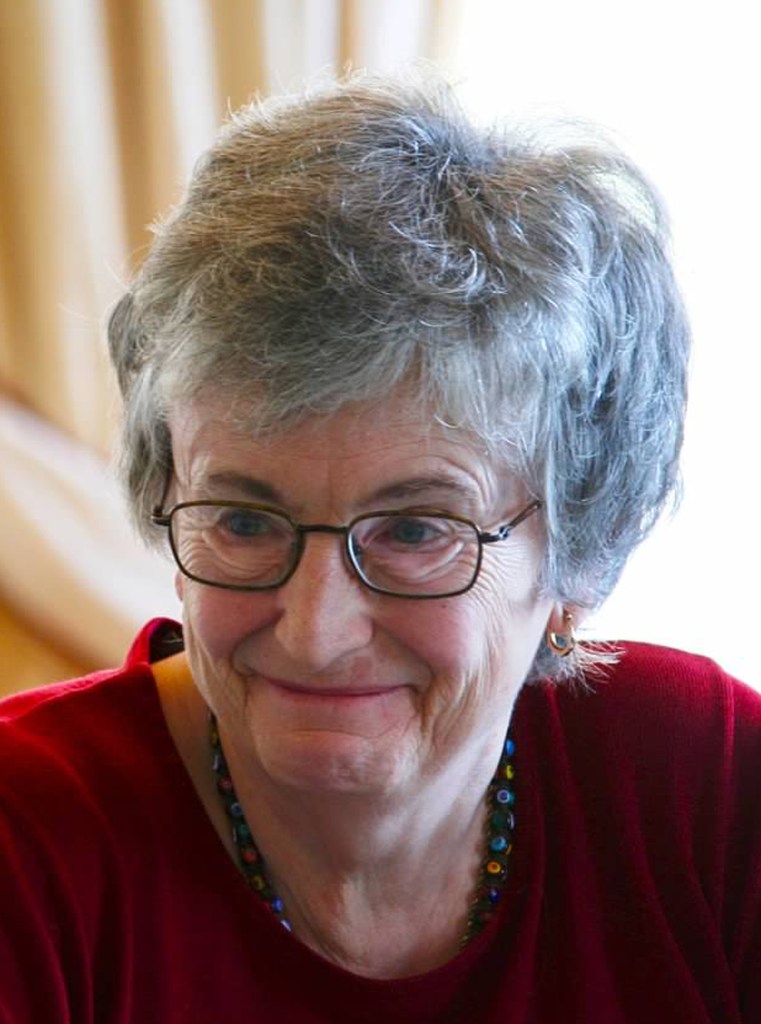
What positions do you currently hold?
I am currently retired, and it is highly recommended! However, I hold two emeritus positions. I am Professor Emerita in Biological Anthropology at University College London, where I was on the faculty from 1976 until 2005 and served both as Head of Department and Head of the Graduate School. I am also President Emerita of the Wenner-Gren Foundation for Anthropological Research, Inc., where I had the honor of running the sole private operating foundation devoted to funding anthropological research (2005-2016). Since retiring, I have also held various honorary positions at NYU and the City University of New York Graduate Center. I am on the Board of the Smithsonian’s National Museum of Natural History and the Curator of Art and Material Culture at the American Philosophical Society.
What is your educational background?
I received my BA (1968) and MA (1972) in Anthropology from the University of California, Los Angeles, and my PhD (1982) in Anatomy and Human Evolution from the University of London. I also have an honorary doctorate from the University of Alcalá, Spain (2016).
What motivated you to pursue a career in biological anthropology?
My career in anthropology and then in biological anthropology happened mainly by accident. I started college as a combined geology/zoology major. But after a summer archaeological field school in 1964, I remember thinking I could indulge myself in a field I enjoyed because I would eventually have a husband who would support me—not politically correct in today’s world, but an honest thought then! Biological anthropology came later, in 1968, after excavating an Upper Paleolithic site in the Dordogne. I realized I was much more interested in the people who made the stone tools rather than the stone tools themselves.
Please describe your early career path.
My career path wasn’t straightforward. During the late 1960s, higher education was expanding, and as a master’s student, I saw my career in junior college teaching. It was a massive challenge for me, primarily because I had suffered from a bad speech impediment as a child, which improved as I got older but was still there. I was initially declined a California Junior College Teaching Certificate because of it, but I persevered. I would have been thrilled with a junior college or state college teaching career in California, but life got in the way. My then-marriage broke up in the early 1970s. It was increasingly difficult to find a permanent teaching position with a master’s degree, and I was looking to redefine my life. Gail Kennedy, a colleague at that time at Cal State University Northridge, had just completed her doctorate in London and urged me to go to the UK. London was one of the primary centers for human evolution research at that time. I arrived on January 1, 1975, with a new life in front of me.
Who have been your most influential mentors?
I am not sure that the concept of “mentor” existed in the 1960s and early 1970s, certainly not in my early academic experience in California and London. However, a few people helped me along the way and would be classified as such today.
- Sally Binford. Sally and Lou Binford were witnesses at my wedding in the field in the Dordogne in 1968, and after both of our marriages ended, we became good friends. She had left the field by then, but her intellect, teaching acumen, and prior academic success showed me that women could make it in anthropology if they wanted to!
- Gail Kennedy. Without Gail, I wouldn’t have gone to London for my doctorate, and who knows what alternative course my life would have taken?
- Peter Andrews, Chris Stringer, and Theya Molleson. Peter, Chris, and I arrived in London about the same time. They took up their first academic positions at the Natural History Museum, and I started my doctoral studies at St. Thomas’s Hospital Medical School with Michael Day. Without their support and that of Theya, who was also at the museum, completing my doctorate and finding my academic footing would have been much more difficult.
- Roland Levinsky and Dame Bridget Ogilvie. Roland was my predecessor as head of the UCL Graduate School, and Bridget had been the head of the Wellcome Trust. They gave me the courage to leave UCL in 2005 and start my new life in New York with the Wenner-Gren Foundation.
What were your most formative training experiences?
In the 1970s, British doctorates did not include any formal training, and I didn’t have the opportunity for a postdoc or two, which, in retrospect, would have been very beneficial. My most formative training experiences must be the archaeological excavations that set me on my trajectory in anthropology, archaeology, and biological anthropology.
What is your subspecialty and how did you choose it?
I describe my interests as the evolution of human adaptation. My doctorate was on the evolution of bipedal locomotion and emphasized comparative anatomy and the then-new analytical method of allometry. However, I am probably best known for my interests in energetics and brain evolution. This topic found me by accident. A colleague at UCL, Bob Martin, asked me to write an entry on primate energetics for the Cambridge Encyclopedia of Human Evolution, which he was co-editing. This request wasn’t too far out because, at that time, most primate energetics focused on locomotor energetics. While doing this, I recognized that there were major unanswered questions involving brain energetics, and the expensive tissue hypothesis followed shortly thereafter.
Which professional achievements are you most proud of?
Five achievements make me smile.
- The book I wrote with Chris Dean, An Introduction to Human Evolutionary Anatomy (1990; Academic Press). At the time, I didn’t understand some of the detailed anatomical descriptions of Lucy and other hominin fossils. I thought that if I, with my PhD in anatomy, was having trouble, other anthropologists would be struggling as well. Chris and I are unsure how we achieved it, but it is still in print after all these years.
- The Expensive Tissue Hypothesis (Aiello, L.C. & P. Wheeler (1995) Current Anthropology 36:199-221). At that time, there weren’t many outlets for publishing in anthropology, and we decided that publication in Current Anthropology would reach the widest audience. It took two years to publish, as the then editor thought that it was too “scientific” for anthropologists. However, we got our “revenge” as it was the most highly cited paper in Current Anthropology for some years and helped to kick-start the modern field of energetics and evolution.
- Becoming the first female editor of the Journal of Human Evolution. I wasn’t prepared for female colleagues telling me they would now submit to JHE because they felt they would stand a fair chance of publication!
- Securing a new anthropology building for UCL. When I became Head of the Department at UCL in 1996, Anthropology was the worst-housed department in the university and had been so for 30-plus years. Six years later, when I rotated off the headship, we had a brand-new building nearing completion.
- My eleven years at Wenner-Gren allowed me to support more than 2000 research projects, fund many international conferences and workshops, and get to know my colleagues worldwide. It was a real joy for me.
In your opinion, what are the biggest challenges facing women in the biological anthropology community today?
The biggest challenge is undoubtedly work-life balance. When I was Head of Department, I used to tell my female faculty that I couldn’t promote them for having a family, but I could do everything in my power to help them succeed. Unfortunately, there is still a lot that needs to be done.
What advice would you offer women in biological anthropology beginning their scientific careers?
Follow your own instincts and desires. If I had listened to sometimes quite loud dissenting voices, I would have never moved to the UK (too risky), written the anatomy book (too early in your career, you should be focusing on research papers), or left academia for Wenner-Gren (what about your research, your “real” career??). I would also advise young women to think outside the box. There are many fulfilling ways to use a degree in anthropology, but the trick is to know what opportunities are out there and what suits you. Then go for it.
What attracted you to BAWMN and what does participating in BAWMN mean to you?
I have been a member of the American Association of Biological (Physical) Anthropologists since 1968 and a regular meeting attendee since about 1985. The gender demographics of the association have changed considerably, and for a few years in the early days, a group of women would routinely go out for a “ladies’ night” dinner. I was attracted to BAWMN because it gives the same feeling of solidarity and support as our dinners did so long ago.
 Biological Anthropology Women's Mentoring Network