Member Profile – Andrea Taylor
Please describe your current position and affiliations.
I’m currently a Professor in the Foundational Biomedical Sciences Department in the College of Osteopathic Medicine at Touro University California (TUC), a small university dedicated to medical and health sciences education. I joined TUC in 2016. Before that, I was at Duke University, where I was on the faculty of the School of Medicine’s Department of Orthopaedic Surgery and also the Department of Evolutionary Anthropology. I still hold an adjunct position in Duke Orthopaedics, and I’m a Research Associate in the Institute for Biodiversity Science and Sustainability’s Department of Anthropology at the California Academy of Sciences.
What is your educational background?
I completed my undergraduate degree in anthropology in 1983 at the University of California, Berkeley. I started my PhD in anthropology at Northwestern University in 1985, but for entirely personal reasons, I left in 1986 and completed my PhD at the University of Pittsburgh in 1992.
What motivated you to pursue a career in biological anthropology?
Growing up, I was deeply curious about the natural world, but I also was an avid reader of literature and history and loved writing—subjects that seemed so disconnected to me that I couldn’t imagine any career that would allow me to piece them together in a meaningful way. I came to the realization that biological anthropology was that career after taking introductory courses in archaeology, biological anthropology, the history of anthropology, and legal anthropology. Berkeley’s traditional, four-field anthropology program was in its heyday back then and I was extremely fortunate to have been taught by some of the most inspirational researchers and leaders in our field: James Deetz, Phyllis Dolhinow, Katie Milton, Laura Nader, Ruth Tringham, Tim White. “Lucy” had only arrived on the scene a few years earlier, Phyllis was teaching from her landmark studies of early primate development, and I was hooked. Anthropology appealed to me because it naturally combined all the elements on my checklist. It took another year of exploring archaeology and doing some archaeological fieldwork for me to realize I was more interested in the biology than the material culture.
Please describe your early career path.
My path toward a career in biological anthropology was circuitous to say the least. I entered Berkeley expecting to pursue a degree in investigative journalism—a career that I thought would at least allow me to combine my interests in history, literature, and writing. The universe clearly had other plans because in the year of my application, Cal offered an undergraduate degree in journalism, but when I matriculated the following year, that program had been eliminated. So, I pivoted. During my freshman and sophomore years I did broadcast news for the student-run Cal news station and was well into a dual major in literature and history when I took an introductory course in biological (then ”physical”) anthropology to satisfy a science requirement. A few more anthropology courses, and I declared my major. After I graduated in 1983, I took a few years off because I needed to work and earn some money. I also wanted to be sure (as sure as anyone in their early 20’s can be about anything) that a graduate degree in biological anthropology was the right path for me.
My graduate career path was as nonlinear as my undergraduate experience, though it started out traditionally enough. In 1985, I left the Bay Area for Evanston and started my studies at Northwestern with Brian Shea. I had every intention of completing my PhD at Northwestern, but I married at the end of my first year of graduate school. My spouse at the time was at Stanford and unable to get a faculty position in the greater Chicago area. Dual careers in academia are always a challenge, but we made it work by landing in Pittsburgh, where I continued my graduate studies at the University of Pittsburgh. I was ABD when I had my first child, and my spouse was in a tenure-track position at Carnegie Mellon, so I didn’t even consider applying for a postdoc. Instead, I took an anatomy faculty position in a local, newly established physical therapy program at Slippery Rock University (“local” as in, Pennsylvania; it was 60 miles from our home.
I don’t typically talk about my personal life, but in the context of the mission of BA WMN, I think it’s important to share this part of my experience because when you’re early in your career it’s easy to view the careers of those more senior as having been a smooth, uninterrupted path to ”success”. Like many of my generation, I was brought up in an academic world that viewed success as graduate and postdoctoral training leading to a tenure-track position, tenure, and promotion. When I was living my early career experience, encountering bumps along the way and feeling very different from others around me, it was both isolating and intimidating, and I second guessed myself a lot. It didn’t help that I created my own narratives, largely out of whole-cloth, about how well-known individuals in our field came to be successful.
For early-career scholars, especially (but not only) women, it can be reassuring to learn that there isn’t one “right”’ or “best” path; nearly everyone’s road takes unexpected twists and turns and is a bit bumpy. I learned this much later in my career after hearing the stories of other mid- and senior-career women, and I wished these stories had been shared with me much earlier. What I want early career women to know is that farther down the road, when I could stop and look back, I was able to appreciate how my non-traditional career path gave me some unique opportunities that were advantageous in ways I could never have predicted and that were hugely influential in shaping the later stages of my career in positive ways.
For example, starting out in a new program at a small, teaching-focused university, I was given leadership opportunities that typically aren’t open to early-career scholars—opportunities that made me attractive to other institutions in ways I hadn’t foreseen. I also made strong connections across the country with educators and researchers in physical therapy programs, orthopedic departments, and medical schools. These connections sharpened my skills as a clinical anatomist, and they allied me with some very powerful colleagues who opened doors for me and ultimately paved the way for my faculty appointment at Duke. That, in turn, opened up a wealth of opportunities for multi- and interdisciplinary research collaborations that continue to this day.
Who have been your most influential mentors?
The word “mentor”’ can mean different things to different people. I think of it in the broadest sense of the word, and I am truly grateful to have had some wonderful mentors who variously taught, advised, guided, sponsored, and encouraged me. Some have been senior mentors, but I have benefited at least as much from mentors in their early and mid-careers. My graduate advisors Brian Shea and Michael Siegel were two of my earliest and most influential mentors. Brian continued to advise me on my dissertation work even after I left Northwestern. Michael was a mentor to me as a dissertation advisor and in every other way that counted—helping me gain confidence in myself, knowing when and how to encourage me, understanding when to step in and when to step back, protecting me when needed, but also knowing when I needed a good kick in the $%!&$.
Since completing my PhD, two of my most influential mentors have also turned out to be my two closest long-standing collaborators—Chris Vinyard and Callum Ross. They have a similar mentality when it comes to science: be rigorous and precise; getting it right is more important than getting it fast; be generous with opportunities; and be forgiving when mistakes happen. They instilled this mentality in me, and I do my best to pass it along to others. Fred Anapol had never heard of me when I emailed him out of the blue for the first time, but he generously welcomed me into his lab my first year at Duke and mentored me in skeletal muscle architecture and through my first senior NSF research award. Rich Kay guided me in navigating the Byzantine politics of Duke. Chris Wall mentored me in mammalian skeletal muscle fiber types, which has been the basis of much of my work over the past 10 years. Susan Antón has been a steadfast mentor to me, offering support, advice, encouragement, and critical feedback in whatever measure was needed, whenever it was needed. Her grace and resilience helped me successfully negotiate some of my greatest academic and personal challenges and inspired me to embrace some difficult, life-changing decisions that, if I’m being honest, I might otherwise not have been brave enough to make.
There are many others who have been generous with their time, who I learned from, whether directly or by example, and who endorsed or sponsored me in ways that kept me motivated when I needed it the most, and who helped move my career forward: Nina Jablonski—fostered connections in anthropology by graciously giving me an adjunct appointment at the California Academy of Sciences back in the late 1990’s, when I was early in my career and teaching in a small health sciences program; Mark Teaford— in his role as AABA Vice President back in 1999, patiently guided me through the process of co-organizing my first AABA symposium, and advised me on how to become more actively involved in AABA; Carol Ward and the late Bill Kimbel— generous in sharing their knowledge, humor, and collaborative spirit.
These are just some of the people and behaviors I think about when I try to be my “best-self” mentor.
What were your most formative training experiences?
Three experiences come to mind, first and foremost, my training in human anatomy. Cadaver dissection and learning from a human body was an eye-opening and unforgettable experience. It changed the way I viewed myself and the world around me and solidified my interest in functional morphology and biomechanics. I came away from the experience with a set of skills that afforded me considerable career flexibility and opportunity.
Being on the faculty of a physical therapy program early in my career was an equally formative experience. The skills and attributes that are valued and rewarded in an academic program aren’t necessarily the same in a clinical program like PT or medicine. Working in an environment centered on patient care meant that I had to think beyond myself. This formative experience taught me a lot about how to work effectively as part of a team and instilled in me a strong sense of empathy and humility that I hope made me a better educator, mentor, colleague, and collaborator.
My initial collaboration with Chris Vinyard nearly 25 years ago was undoubtedly one of the most formative experiences of my career. It took the form of a late-in-life postdoc—another part of my nontraditional career path. When I came to Duke, I knew I had scientific questions that required additional training to answer, particularly in the area of muscle biology. Chris was a postdoc at the time, but he had a wealth of experience with EMG and experimental biomechanics, whereas most of my experience was in comparative functional morphology. Our shared interests in primate jaw-muscle function led to our (and my) first research collaboration. This experience taught me just how powerful collaboration can be and how important it is to choose good collaborators. What I thought would be a one-time thing turned into a quarter-century partnership and friendship that continues to this day and I’m a far better scientist for it.
What is your subspecialty and how did you choose it?
I study craniofacial biomechanics and evolution in primates. I’m especially interested in how development, body size, and diet influence feeding-system morphology and species diversification. I think this subspecialty choice is a natural product of my time at Cal learning from Katie Milton about how primates meet their nutritional needs and adapt to different diets, as well as my time in Mike Siegel’s lab using rodents and small mammals as experimental models to understand how growth, plasticity, and behavior interact to influence craniofacial morphology. In my lab, we use the comparative approach to understand how the musculoskeletal system models, remodels, and adapts to behavior—mostly feeding behavior, but also nonfeeding behaviors such as social signaling through canine gape display. Collaborating with experimental biologists and paleoanthropologists, I’ve been able to integrate data from my lab with experimental studies to test biomechanical and evolutionary hypotheses about feeding behavior, diet, and morphology, to model performance, and in some cases to apply these data to the paleobiology of primates.
How do you balance the competing priorities of teaching, research, outreach, and personal life?
The short answer is that I’m a workaholic with a very supportive partner of infinite patience. I’m also an inveterate planner and organizer, and I’ve gotten better at setting aside blocks of uninterrupted time, meaning I won’t schedule a meeting during that time and I avoid reading/responding to emails. I try as much as possible to coordinate my service and outreach efforts with my academic and research goals, and I do my best to maintain boundaries and to be selective about what I say “yes” to. But I don’t always get as much exercise or sleep as I should.
The long answer is that achieving balance in my life has been far more complicated and nuanced. My son was three years old when I started my first full-time faculty position in 1991. I had my daughter three years later and when she was about a year old, we discovered she had bilateral sensorineural hearing loss. This was still very early in my career—only a few years after defending my dissertation. In 1996, I took another faculty position in a small health-sciences college in the Bay Area. This move was largely for personal reasons, an important one being proximity to superior care for my daughter and to family support in California. So, in those first nine years post-Ph.D., I immersed myself in my responsibilities to my family and as a full-time faculty member teaching anatomy.
I did my best to keep my research going, getting some small grants and even traveling nationally and internationally for short periods of time to collect data. Yet I declined a tenure-track offer from an R1 university in California during that time because it was obvious during the course of my one-day interview that the culture of that department wouldn’t support a faculty member who was also the young mother of two young children—a mother who might need to miss a faculty meeting because the school called to say that their child was running a fever and needed to be taken home, or who needed to take their child to audiologic habilitation therapy two mornings a week, or who might want to duck out of the lab to attend their child’s school performance.
I was a tenured full professor in 1999 when I was offered a tenure-track position at Duke. So, in 2000, at the age of 39, I gave up my tenured full professorship for an assistant professor, tenure-track position (lecturer, actually, for the first year, until my appointment made it through the Board of Trustees), in a medical school with a 10-year tenure track. In retrospect, I can imagine how crazy this must sound, but at that point in my life, my kids were 12 and six and I felt they were both in a place that permitted me to rebalance my priorities. I essentially started my career over, shifting my research direction and retraining in another lab, getting my own lab up and running, developing collaborations, submitting grants, writing papers, teaching anatomy, serving on committees, engaging in outreach, and performing the myriad other tasks expected of a full-time faculty member in a medical school at an R1 research university. It isn’t that the competing demands diminished. To the contrary, they expanded in every dimension, but I was better equipped to cope and manage them.
This isn’t to suggest that I achieved perfect balance in my life—far from it. During the 10 years I was working toward tenure my mission was singular and focused. New friendships emerged out of some working relationships, with some who remain like second family to me, but I also let many of my older relationships slide, I spent far less time with my family than I would have liked, and vacations were a rarity. When I made the decision to leave Duke for TUC in 2016, that decision was again based on shifting personal and professional priorities. My main professional reason for leaving was an irreconcilable clash in leadership style and values between me and a young, inexperienced program chief who was hired shortly after I received tenure. At that point in my career, I had more control over my career path. This enabled me to essentially engineer an opportunity in a university where the leadership style and values better aligned with my own, and where dual-career anatomists could get faculty positions in the same department.
The reality is that balance in my life has been more about prioritizing both needs and desires as they shift in real time and accepting that priorities change, sometimes for reasons outside of my control, no matter how intentioned, well planned, and well organized I try to be. I also can’t emphasize the importance of having support structures in place. For me, this happens to be my spouse, but it could be anyone who champions your successes and can be relied on, without guilt or embarrassment, when help is needed. I’ve learned that achieving balance is not binary between having a meaningful career and having a meaningful personal life. Without making light of the many challenges, I think it’s possible to have both if we take the longer view of “balance” and a more holistic view of ourselves.
Which professional achievements are you most proud of?
I would have to say that achieving tenure in the medical school at Duke, at the age of 49, was a gratifying moment. As a basic scientist in a clinical sciences department at Duke, I was truly a fish out of water. In a very large program, there were only two of us on a tenure track—me, a biological anthropologist studying primate biomechanics and evolution (read: relevance to translational or clinical research?), and a neurobiologist. I had a secondary appointment in what was then Biological Anthropology and Anatomy (now Evolutionary Anthropology), and when I was promoted to Associate Professor in 2007, my secondary appointment became coterminous with my primary appointment, but it was clear that the medical school would have preferred that my primary appointment be in Evolutionary Anthropology. There were medical school administrators—program chiefs, chairs, deans—who wondered aloud why I was a basic scientist on a tenure track in a clinical sciences department; administrators who wondered aloud why, as a biological anthropologist and anatomist, I was even in the medical school. On more than one occasion I was “encouraged” by the medical school to take myself off the tenure track, and the implications were obvious. That I was awarded tenure, and it came on the heels of receiving the Duke School of Medicine’s Master Teacher/Clinician award, were equally gratifying in the sense that this was hard-won validation of my value as a biological anthropologist and anatomist in a tough and often unforgiving medical school environment.
When in 2001 I retooled in Fred Anapol’s lab and began studying the functional and evolutionary correlates of fiber architecture in primate chewing muscles, there were only a handful of published papers on this topic. There’s been a resurgence of interest in this research over the past 10–15 years and I like to think my work had something to do with that.
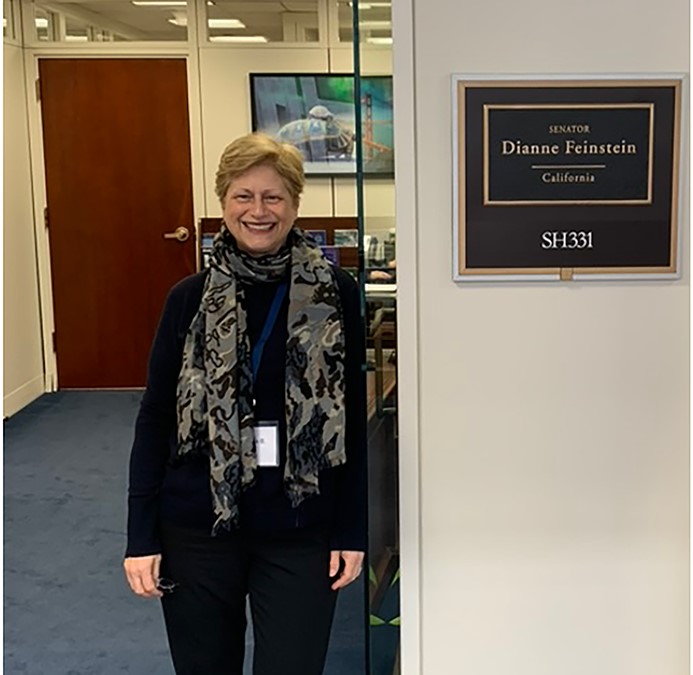
Receiving the Gabriel W. Lasker Service Award in 2023 in recognition of a lifetime of service was an incredible honor. But it’s the service itself that’s been meaningful to me: the privilege of serving as joint Editor-in-Chief for the Journal of Human Evolution; serving on the FASEB Board of Directors to support science policy and advocacy and lobbying senators on capitol hill for increased NSF and NIH funding. My work with the AABA Committee on Diversity Women’s Initiative (a joint labor of love with Robin Bernstein) and HCARE, committees of similar purpose—empower women through mentoring and professional development and foster a culture in which every member of our academic community is treated with respect. One of the greatest compliments I ever received came from an academic leader at Duke who told me (in a tone that made it clear it was intended as anything but a compliment) that I take great pleasure in facilitating the successes of others. I’m proud to say that’s absolutely true.
In your opinion, what are the biggest challenges facing women in the biological anthropology community today?
When I decided to major in anthropology and continue on to graduate school, I met with my undergraduate advisor in his office to complete the paperwork for my major. My advisor, a well-known and highly respected member of our field, looked me directly in the eyes and asked me point blank why I would want to do that since I was only going to get married, have children, and drop out of the field. This didn’t stop me, but it has obviously stuck with me. It accounts in no small part for my work harder, be better, continually prove myself, keep it together at all times mentality. It explains why I didn’t take a maternity leave after I had my first child, though, to be clear, this was neither asked nor expected of me by my graduate thesis advisor. I want to believe that 43 years later, no woman in biological anthropology will be subjected to this question or others like it. In those 43 years, I’ve seen the landscape change, palpably and in the right direction. In the past 10–15 years, I’ve seen AABA leadership bring momentum to this culture shift, ushering the conversation out into the open through presidential panel discussions, supporting the advancement of women through organizations like BA WMN and the Committee on Diversity Women’s Initiative, establishing codes of conduct and ethics and statements on sexual and other forms of harassment, and creating a formal mechanism for reporting, investigating, and acting on behaviors that threaten physical and emotional harm (behaviors that are by no means aimed exclusively at women).
These are all incredibly positive steps, but steps that have been hard won and can easily be eroded, whether by neglect or design. Looking across that same landscape, women are still being harassed, underestimated, undermined, and battling imposter syndrome. These attitudes and behaviors exact a toll on the mental health of women individually and collectively. When one woman experiences these behaviors, other women see this and think “If that could happen to her, it could happen to me.” We need to continue to push for a culture in which women in the academy are valued for their strengths and encouraged to be their authentic selves. There is definitely room for improvement: in the academy, until such time as valuing and respecting women and taking women seriously becomes normative behavior, and protecting women supersedes protecting the institution; and in the field, where women are at their most vulnerable. Many of us—women and men alike—came through the academy and became members of AABA in a culture that was expressly designed to undermine women, and it is so easy for any of us to default to that culture. We need to do everything we can to build up community and lift women up, and this takes care, commitment, and practice. As I continue to work with early-career women, they seem so much more savvy, self-possessed, and aware than even women 15–20 years ago, and certainly more than I was when I graduated, and this gives me reason to be optimistic.
What advice would you offer women in biological anthropology beginning their scientific careers?
Advice I’ve found particularly beneficial over the years, and that I periodically need reminding of myself: Seeking out good mentors and good collaborators is important at every career stage. It’s ok to make mistakes and ask for help (I’ve done plenty of both). If second-guessing your worth, abilities, ideas, or choices, seek a reality check from someone you trust to give you fair, honest feedback. Keep an open mind when things don’t go quite as expected and make the most of whatever opportunities present themselves. Sometimes people will advocate on your behalf, but it’s never too early to get comfortable with advocating for yourself. Pay close attention to your mental health—a career in science is hard, but it should also be rewarding and bring you joy.
 Biological Anthropology Women's Mentoring Network